Showing posts with label Historical. Show all posts

Monday, February 5, 2018

The Price of Freedom by Rosemary Rowe


The Price of Freedom featuring Libertus, a freedman mosaicist, is book 17 in the popular series Libertus Mystery in Roman Britain. The author has done a wonderful job keeping her series fresh and fun, with lots of local color and Roman history for amateur historians, along with red-herrings, a complex mystery, and suspects galore for mystery fans.

Libertus narrates the story in first person, as if it were a chronicle of his adventure written soon after its conclusion. He has a dry wit, and is a personable narrator, a Celtic familyman-business owner who gets roped into problem-solving for his former master. The life of slaves in Roman Britain is portrayed in all its horrible variety, and features especially strongly in this book.


While it is fun to read all the books in the series in order, to visit periodically with “old friends”, the author does well at bringing new readers up to speed with Libertus's life to date, quickly and painlessly. The dialogue heavy style keeps the story active and moving forward quickly. However, the history woven into the tale can slow it down a bit. But those bits are beloved by die-hard fans of fiction set in ancient Rome's empire.

I found it entertaining to travel alongside Libertus through Roman Britain, encountering realistic characters and believable adventures. The author uses the story to point out the parallels between the past and today, since the one constant over time is human nature, in all its violence, fanaticism, patriarchies, and barbarism. Those darker elements have, rightfully, always been a part of Libertus's tales, since the Roman Empire was a very violent, brutal place with lots of institutionalized sadism.


There are many characters in the novel, which usually isn't a problem for me, and is how a novel should be, but for whatever reason this time I had difficulty keeping people clear. The ending was rather quick; I would have like a little for strands of the story tied up with Libertus's hindsight. But I'm not really complaining since this was a very entertaining read! I look forward to spending time with Libertus again in his next book, perhaps with more of his family in that one.

The books in the Libertus Series to date:
  1. The Germanicus Mosaic
  2. A Pattern of Blood
  3. Murder in the Forum
  4. The Chariots of Calyx
  5. The Legatus Mystery 
  6. The Ghosts of Glevum 
  7. Enemies of the Empire
  8. A Roman Ransom
  9. A Coin for the Ferryman
  10. Death at Pompeia's Wedding
  11. Requiem for a Slave
  12. The Vestal Vanishes
  13. A Whispering of Spies
  14. Dark Omens
  15. The Fateful Day (reviewed on this site)
  16. The Ides of June (reviewed on this site)
  17. The Price of Freedom


From the book's description:
The death of a local tax-collector spells trouble for Libertus in this compelling historical mystery.

Having been inveigled into standing for the local curia, responsible for the submission of all local tax, Libertus discovers that any shortfall must be made good by the councillors themselves. So when news arrives that a tax-collector from a nearby outpost has committed suicide, having gambled everything away, Libertus is despatched to make enquiries, in the hope of recovering at least some of the missing revenue. He has also been asked to attend a wedding, in place of his patron, who is expecting a visit from an Imperial Legate.

But the assignment which should have seen Libertus for once treated as an honoured guest begins to take grisly and unexpected turns. As he pieces together the unlikely truth, Libertus finds himself in mortal danger. Freedom, in all forms, is only relative ? but there is a high price for it, sometimes paid in blood?
Here is a direct link to the book at Amazon.com:


Tuesday, October 18, 2016

The Girl From Venice by Martin Cruz Smith


This is probably one for readers who enjoy Raymond Chandler books and the film Casablanca. The author uses the hard-boiled style to present a tough-guy love story set in the era when Italy went truly, totally bonkers: the end of WWII. The spare style is best appreciated if you picture the text as a film playing in your mind.

Family, rivalry, friendship, loyalties, prejudice, politics, pop culture and military culture all mix together in this well-researched book. Through it all we are shown how the exhausted Italians just tried to keep their heads down and emotions doused so they could make it through to the end of the horrible nightmare. Clinging to daily rituals and pretending that the outside world was more fiction than reality, the inhabitants of Venice feel very real in this story.


Readers will get the most out of the story if they have a basic understanding of the history of the era. Briefly, after insanely embracing Mussolini, a megalomaniacal bully, criminal, misogynistic, pathological liar who promised the world and more to the poor country, Italy then came to its senses and switched sides in the war Mussolini signed them up to. Then they had to fight a war against Nazis while at the same time fighting a civil war between opposing Italian political sides.

To top up the insanity, an embattled and increasingly bonkers Mussolini established a fantasy Republic of Salo in northern Italy where he deluded himself into believing he could hang on to power. The author takes the reader into that crazy place at a certain point in the novel, and portrays the crackpot enablers of the dictator very ably, bringing to mind the evil, manipulative minions in the classic 1945 Rossellini film Roma, Citta Aperta.


The tough-guy with a broken heart protagonist of the book, the Venetian fisherman Cenzo, has shut himself down to make it through the war. He fishes, sleeps, eats and broods until he fishes up a young Venetian woman, Giulia, who escaped a purge of Jewish prisoners. She brings him back to life, and through the course of the book, she becomes the reason he reengages with the insanity around him, putting him in contact with the Republic of Salo and the forces fighting in Italy on all sides.

At first, refined Giulia is seen thus by jaded, coarse Cenzo:
The girl was a brief interruption in his life and the less he knew about her, the better.
Occasionally we see the story from Giulia's perspective, but mainly the narration is from Cenzo's perspective, which reflects the Italian perspective at that time.
Then you switch sides in the middle of a war, it gets very confusing.


The first part of the book is the reawakening of Cenzo that comes through his discussions with Giulia as he teaches her his fisherman's craft. Like therapy, describing what he loves most in life, what keeps him sane when the world around his is off its rocker, helps Cenzo open up to Giulia. He even comes to care about her troubles.
...he found his own miseries reduced in size when he focused on hers.
Acts Two and Three of the novel then move the reawakened Cenzo into the world of spying, the retreating German Nazis, the rival partisan factions, and the wacko Republic of Salo. There is some violence but this is not a gory book. There is some sex, but suggested only, not in scene. There are family rivalries that become explained as the story progresses, explaining some of Cenzo's resentments and his heartbreak. Cenzo is a tough-guy who falls for a waif and tries to protect her in the middle of a world gone crazy.


The author is a wonderful writer with a distinctive style that will appeal to his loyal fans. Some readers may find the spare, butch, hard-boiled style not to their liking. I suggest sticking with it, and being an active reader, visualizing the story as it is told, and empathizing with the characters to understand their feelings. The style is for perceptive, informed readers who don't need, or want, everything spelled out. The plot is unraveled at the end with a clear explanation for the reader.

For Italophiles, the book offers a look at an odd moment in Italy's history, but from a different, more personal angle than found in history books. Brush up on the history beforehand, then enjoy the details that come out from the author's in depth research, along with the tender tough-guy love story.


From the book's description:
The highly anticipated new standalone novel from Martin Cruz Smith, whom The Washington Post has declared “that uncommon phenomenon: a popular and well-regarded crime novelist who is also a writer of real distinction,” The Girl from Venice is a suspenseful World War II love story set against the beauty, mystery, and danger of occupied Venice.

Venice, 1945. The war may be waning, but the city known as La Serenissima is still occupied and the people of Italy fear the power of the Third Reich. One night, under a canopy of stars, a fisherman named Cenzo comes across a young woman’s body floating in the lagoon and soon discovers that she is still alive and in trouble.

Born to a wealthy Jewish family, Giulia is on the run from the SS. Cenzo chooses to protect Giulia rather than hand her over to the Nazis. This act of kindness leads them into the world of Partisans, random executions, the arts of forgery and high explosives, Mussolini’s broken promises, the black market and gold, and, everywhere, the enigmatic maze of the Venice Lagoon.

The Girl from Venice is a thriller, a mystery, and a retelling of Italian history that will take your breath away. Most of all it is a love story.


Here is a direct link to the book at Amazon.com:


Tuesday, May 3, 2016

The Painter of Souls by Philip Kazan


This is the first of a series of books that will be issued, each imagining a phase in the life of the early Italian Renaissance painter Fra Filippo Lippi.  We know only about some of his artworks and some basic points about his life.  The author imagines the rest, and presents this biography of the artist's early years in great detail, often from the artist's perspective.

In this book you might be deceived by the simple style into thinking this book is written for teens.  When you encounter the first vulgarities in English and in Italian, you'll realize the book is written for adults.  There is even a sex scene.


Lippi self-portrait
 

Historical novels tend to be told in the present tense these days, to bring the past to life in the reader's mind, and this novel is no exception.  Please don't complain about this in the reviews.  I'm very tired of reading people's complaints because they don't want to read more than a few pages written in present tense.

If you read ten pages plus, you won't even realize it is in present tense any more, and you'll just enjoy the intimate closeness the tense creates with the events and the main character.  Give it a try.  You might actually enjoy it, like so many others, especially younger readers who devour whole popular series in the present tense.

Just because it is unfamiliar to you doesn't make it wrong, or deserving of terrible reviews or terrible ratings.  Okay, enough said...


Fra Lippi was not a very good friar, but this first book only covers his life up to his parting with early Renaissance artist Masaccio, his mentor and surrogate father figure.  All the really scandalous things occur later.

The book's Prologue is deceptive, suggesting that the artist's whole life will be covered in the book.  That is not the case.  Future volumes will cover the later periods. 

Each volume will presumable present the artists and local bigwigs from that era, along with some major artworks, just like this first book does.  How those artworks came to be created is covered in quite a bit of detail.


From the book's description:
An extraordinary story of passion, art, and intrigue, this novel journeys to a time and place in Italy where desire reigns supreme—and salvation is found in the strangest of places.

Beauty can be a gift—or a wicked temptation. So it is for Filippo Lippi, growing up in Renaissance Florence. He has a talent—not only can he see the beauty in everything, he can capture it, paint it. But while beauty can seduce you and art can transport you—it cannot always feed you or protect you.

To survive, Pippo Lippi, orphan, street urchin, budding rogue, must first become Fra Filippo Lippi: Carmelite friar, man of God. His life will take him down two paths at once.

He will become a gambler, a forger, a seducer of nuns; and at the same time he will be the greatest painter of his time, the teacher of Botticelli and the confidante of the Medicis. So who is he really—lover, believer, father, teacher, artist? Is anything true except the paintings?


Here is a direct link to the book at Amazon.com:


Please visit the author's website/blog.


For those who would like to know more about Lippi:


Tuesday, April 5, 2016

The Bone Keepers (Mythmakers Trilogy) by James LePore and Carlos Davis


The Bone Keepers is book three in a historical conspiracy thriller trilogy.  There are no cliffhangers, so one can read each book and get a very satisfying story with each one, independent of the others.  Like many books in this genre, sometimes called the "Dan Brown" genre, the Catholic church plays a central role, as do long held secrets.

The story moves through time to recount the backstory to the main story that unfolds in and around Rome, Italy, in the year 1943.  The reader visits Judea in AD 13 and 60, Italy in the 1930s and then the 1950s, Galilee in the year 33, and Oxford, England, in 1943.  England is where the searchers of the secrets, two British spies, are recruited for their assignment.  In this trilogy, the spies are fictionalized versions of real people:  spies and later authors Ian Fleming and Tolkien.


Tolkien


The books in The Mythmakers Trilogy are:
  1. No Dawn for Men
  2. God's Formula
  3. The Bone Keepers

Who was a bone keeper?  The reader learns that a bone keeper in the ancient world was someone who arranged a burial, then later collected the deceased's bones and put them in an ossuary, a bone box, inscribed with the person's name and family name.  The ossuary was then usually stored by the family.  I'm not giving anything away that isn't in the book's spoiler description, when I can say that the bone keepers of the title, are hereditary keepers of the bones of the Christ.

Yes, Christ rose from the dead, and doubting Thomas felt the proof that resurrected Jesus included his bones.  And the women by the tomb of Christ, that was borrowed from Joseph of Aramathea, attested to the fact that the resurrected Christ left nothing behind in the tomb.  That means that the religious grounding of the book could be considered blasphemy by some, or just a bit weak by others.  Most readers of these books, however, read them with a wink and a nod, forgiving those things in the name of entertainment.


Ian Fleming


The authors have done their research on the real people who are the inspiration for their fictionalized spies, Tolkien and Fleming.  They use the truth to bring entertaining verisimilitude to the fiction.  They also use the men's fiction to add familiar elements to The Bone Keepers relating to the two men.

There are sexual scenes in the book, which is for adult readers.  The female character reads at times realistically, but also at times she stretched my credulity as a female reader.  The writing is fluid, and the editing is well done.

There is much invention and entertaining suspense in the book, which will surely please lovers of this genre.  The use of Tolkien and Fleming as characters in the book(s) is something that fans of those men's fiction might enjoy.  The authors provide a satisfying ending to this spy, buddy adventure, romance and religious story, all wrapped up in the historical conspiracy genre.


Jerusalem Mount of Olives burial cave with ossuaries


From the book's description:
It is Rome, 1943. The war in Europe is at a tipping point, but the direction in which it will tip is terrifyingly unclear. For either side, one dramatic initiative could change everything. It is under these conditions that the Nazis discover a secret that has been maintained for nearly two millennia – that the bones of Christ have been guarded in a cave in Italy by a small, secret group. If the bones can be uncovered, Hitler believes he will be able to use them to topple Christianity and turn the war irreversibly in his favor.

The clues to the location of the bones or the people protecting them are scarce. MI-6 agent Ian Fleming and scholar J.R.R. Tolkien – working in tandem once again at the behest of the British government – must spearhead a hastily assembled team, including an alluring prostitute, to piece the clues together before the Nazis try to turn humanity on its head.

The conclusion of the stunning trilogy that began with the national bestseller NO DAWN FOR MEN and continued with GOD'S FORMULA, THE BONE KEEPERS is literary entertainment of the first order.

Ossuary of Caiaphas the high priest who presided over the trial of Jesus of Nazareth


Here are direct links to the books at Amazon.com:


Please visit author James Lepore's website.


Wednesday, March 9, 2016

Blood Curse (Commissario Ricciardi Series) by Maurizio di Giovanni


Literature, horror, police procedural, classic mystery:  that's what you get in the Commissario Ricciardi Series.  Blood Curse is book two.  Two aspects of Italian culture are featured in Blood Curse:  motherhood, and an over emphasis on physical beauty.  People suffer terribly in the book for both aspects.

The book begins by introducing the characters, using skilled third-person narration in both the classic omniscient style and sometimes in the limited style, with a darkly ironic narrative voice.  There are many poetical touches in the text, especially when Naples is described.


Book One


To be honest, one-third of a way into the book, I returned to the start and skimmed through to make sure I had everyone and everything thing straight, before continuing reading through to the end.  It was worth the effort.

I love challenging books that have big rewards, and this is one of those books.  There is much for an Italophile to enjoy in this series that is written in Italian and wonderfully translated into English.  The translator smoothly inserts explanations of the Italian elements, keeping a strong local flavor while making it intelligible for non-Italian readers.


 Book Three


Horror is not my favorite genre, and I avoid horror films like a plague, but I can just bear it in a book.  The horrific descriptions of the recently deceased in Blood Curse, and the other books in the series, have a purpose. 

Police Commissario Luigi Alfredo Ricciardi di Malomonte has a special ability that gives him a decided edge when solving homicide cases:  he can see the ghosts of the recently deceased, and hear their last thoughts and words.

With that ability (reminiscent of the film Sixth Sense and the TV show Ghost Whisperer) Ricciardi is:
...the sole spectator of the rotten theatre of human evil.


Book Four


The era is the early years of Italy's Fascist regime, the 1930s, so the reader gets a glimpse at what life under the Fascists was like (a police state is not pleasant, but many needed modernizations were made to Italy's infrastructure).

The setting is southern Italy's iconic city, Naples.  There is a real feel for the city and her people.  The differences between today's Naples and the Naples of then are pointed out, too.  If you know Naples, then you'll find that extra interest in the books.
The city reminded Ricciardi more all the time of one of those houses with a nice parlor for entertaining guests while the rest of the rooms were falling apart.


Book Five


Commissario Ricciardi is a tragic figure, suffering since childhood with his visions.  He isolates himself so as to not taint others with his burden, but that just adds to his sadness.  He was given a privileged upbringing, one that we glimpse in flashbacks now and then.

He has few close friends, but they are fiercely loyal:  his nanny from childhood, his police Brigadier, and the medical examiner who calls Ricciardi the "Prince of Darkness" because of his spectral appearance that strikes all who see him.


Book Six
 

Ricciardi's attempts, sometimes just imaginary, to have normal human contact, are very touching.  It is Ricciardi's, and his close friends', strong decency at the heart of the story that made the death and suffering bearable for this reader.  There is also some humor to lighten the tale.

If you are looking for Italian crime novels with a difference, this could be your go-to series.  Like all Italian fiction, it is rich with human psychology, both the good and the bad.  It is also at times literary, poetical, touching, funny, ghostly, macabre, fascinating and even educational about the historical era. 


Book Seven
 

Here are the books to-date in the Commissario Ricciardi Series:
  1. I Will Have Vengeance (Winter - Novella)
  2. Blood Curse (Spring)
  3. Everyone in their Place (Summer)
  4. The Day of the Dead (Autumn)
  5. By My Hand (Winter)
  6. Viper (Spring)
  7. The Bottom of Your Heart (Summer)

Here is a direct link to the series page at Amazon.com.  Here is a direct link to Blood Curse at Amazon.com. 


Please visit the author's page at his English language publisher's site.


Tuesday, December 1, 2015

Messina by Liz Galvano


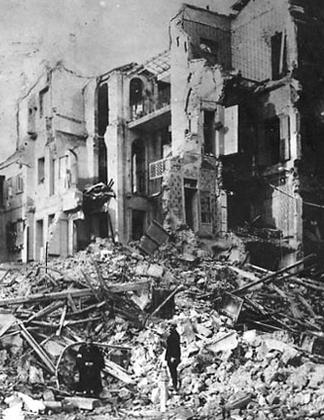
Messina is a historical romance novel with a very unique setting:  the aftermath of the destruction of the Sicilian city of Messina in 1908 from natural disasters.  The author makes her protagonist doctors, Lucy and Giovanni, part of the relief effort.  We are put on the ground with them to be eyewitnesses to the tragedy.  This story is rich with Italian culture, romance, medicine, faith and some very moving melodramatic touches.

In many ways Messina is an old-fashioned novel with the monumental setting, characters writ large, the force of history ever present, belief in God central to the characters' story, and a pure romance between a saintly man and a virginal woman.  The author makes the most of these elements to create a ripping good yarn, to use old-fashioned language.


Just so you know...

The Messina (and Reggio) earthquake hit on December 18, 1908, at 5:20 a.m. and was quickly followed by multiple tsunamis.  Fire then hit the ravaged city.  Ninety percent of all buildings in Messina were destroyed.  Because of the timing of the disaster, most of the city's 200,000 inhabitants were in bed when the quake hit, so they were buried in the ruble.

The unprecedented disaster prompted an impressive international rescue and relief effort.  Mass emigration of survivors occurred to other cities in Italy and abroad.  New Messina was built over the ruble of the old city, making it several feet higher than the old city.  The few buildings to survive the disaster are clear to see, sitting several feet lower than their surrounding buildings.

Many of Messina's survivors refused to return to the reconstructed city.  They did not want to live over the unmarked tombs of their compatriots who were never dug out.


Dr. Lucille James is a young American surgeon who has a severe case of daddy-worship along with a chip on her shoulder and a dent in her self-esteem.  Her relationship with Dr. Giovanni Castello, a driven, ascetic surgeon who is damaged from traumatic loss, is the central emotional story in Messina.  However, the ravaged city's story is told too, with heartrending details that can make the reader feel like they were there on the ground.

The total devastation surrounding our heroes creates a war-zone feeling, and their tented hospital quickly takes on a M.A.S.H. feeling with emotionally and physically exhausted personnel struggling to maintain their humanity and sanity.  Giovanni quickly forms a tight bond with Lucy so he can protect her from a place where she insists on being.  Their relationship grows into friendship and beyond.
To have someone befriend and accept her made even the ragged mess tent seem a beautiful place.


The narrative style is 3rd person limited, letting us in only one character's mind.  But the point-of-view of the narration alternates generally between Lucy and Giovanni, but we also get to see into the minds of a few of the supporting cast.  The characters grow though the events related, each blossoming into a better person by the end.

There are some medical scenes that may be a bit much for the squeamish, but they are quick and the author does not revel in gore.  By the mid-point of the novel, the medical story and the disaster of Messina takes a back seat to the growing love story.  The romance language flows then.
Every time he held her, she felt the same way, as though she had always been a part of him.


Lucy and Giovanni are an attractive couple, each becoming a better person through their love for each other.  Theirs is a chaste courtship, however, in this clean romance novel, since both of them embrace their religious convictions and the proscription of intimacy before marriage.  Their faith is integral to the story, just as peoples' faith was generally much more integral to their lives in those days.

One of the supporting cast is Lucy's father, Henry James.  Yes, I know, it is an unfortunate choice to name him after the famous author.  It distracted me throughout the tale, to be honest.  Dr. Henry James is a bigot and a father who created a much too intimate relationship with his daughter. 


The author includes much about Italy in the story, and many Italian words and phases.  To help the reader, she provides an Index with translations of the Italian used in the book.  The peasants in Sicily at the time are shown, as well as the landed aristocracy, of which Giovanni is a member.  The customs and traditions of the aristocracy, which are closely linked to Catholicism, are touched on in interesting detail.

Messina is an old-fashioned romantic drama in the style of The Painted Veil.  


From the book's description:
Ominous words from the stone-faced physician at the temporary hospital greet her: “Welcome to hell, Miss James.” No description could be more accurate. Earthquake, tsunami, and fire have razed Messina, Sicily. In a single night in 1909, one hundred thousand people never wake up.

Physician Lucille James is determined to help despite horrendous conditions, almost non-existent medical supplies, and the opposition of the medical community she worked so hard to join.

Giovanni Castello, the man facing her now, stands as her biggest opponent. Surrounded by blood and death and pushed to the edge of exhaustion, Lucille relies on God as her only option. When God gives a gift, after all, a person must use it.

Will she have the strength, courage, and faith to do so?


Here is a direct link to the book at Amazon.com:


Sunday, September 27, 2015

Murder in Megara (John the Lord Chamberlain Mystery) by Eric Mayer, Mary Reed


I love the originality of this murder mystery series, in a genre that often feels rehashed.  It is set during the Byzantine Era, when the Eastern Roman Empire was expanding after centuries of contracting.  The Emperor Justinian used brute force to reclaim all the bits and pieces that had once made up the Roman Empire, and brought them together again.

John, the protagonist of the series, of which this is book eleven, is a man who was enslaved, then made into a eunuch to work at the Byzantine court, the sexual mutilation a requirement of high civil servants at the time, a practice imported from the courts of Asia and Persia.

He worked his way up the bureaucratic ladder using his intelligence and clever skill, to reach the pinnacle, the Lord Chamberlain's position, Emperor Justinian's Chief of Staff, so to speak.  The top is always a dangerous place to be, especially in a political monarchy held together by military force.


The books in the John the Lord Chamberlain Mystery Series:
  1. One for the Sorrow (reviewed on this site)
  2. Two for the Joy
  3. Three for a Letter
  4. Four for a Boy
  5. Five for Silver
  6. Six for Gold
  7. Seven for a Secret
  8. Eight for Eternity
  9. Nine for the Devil
  10. Ten for Dying
  11. Murder in Megara
The authors provide John with a richly imagined past and present.  In Murder in Megara, John is an exile from Constantinople, deemed a political enemy.  He is banished to his newly purchased property in Megara. Southern Greece.  That's where the story unfolds, rather than the busy capital which is the setting for the other books in the series.


I loved delving once again into John's life.  It felt like I was catching up with an old acquaintance, a fascinating and clever acquaintance.  The writers, as always, make the setting both exotic and familiar.  This series is a treat for fans of both historical novels and murder mysteries. 

Murder in Megara shows that John's life after his exile, and after the confiscation of most of his wealth and property, is still precarious.  He is under surveillance, since the usual fate of men like him was death.  John should count himself lucky, which he does, since he is still surrounded his friends, employees, and the love of his life, a cast of characters readers of the series will know well.

John suffers from the paranoid gossip and xenophobia of the locals.  He faces much local hostility:
We don't need a new landowner, especially one who'll actually live on his estate, meddling and upsetting things.


What did a farm estate produce in those days?  Honey, olive oil, wool, crops, live stock were common commodities, just as they were from Ancient Roman times up to the industrial revolution, when specialization pushed many small farmers out of business.  That existence is well portrayed in the book.

The authors skillfully present their story and characters.  As is the case with this genre, the setting and characters are introduced well before the titular murder occurs.  All the backstory a reader needs to know from the previous books in the series is skillfully presented, making it possible to read Murder in Megara as a standalone book.

Something that has always endeared me to John is that he refuses to employ slaves, since he was once one, and he cannot bear the indignity that it inflicts on the soul of the enslaved.  Since he chose to live modestly in Constantinople, he could indulge his principles regarding slavery, but when he becomes an active estate owner, there are economic pressures that come to bear on him, but his principles stand firm.  I'm glad, because I would hate to start disliking John now.


My advice is to avoid the book descriptions of the series books and this book, since they always contain spoilers, especially in the mystery genre.  Just go for it.  Read and enjoy the story as it develops.  Enjoy the rich cast of characters, too, who the capable writers portray distinctly and imaginatively. 

To be honest, I don't understand book reviewers who think novels have "too many characters".  A novel is supposed to have lots of characters.  Short stories and perhaps novellas can exist with a small cast of characters, but a novel is supposed to be rich with a multitude of characters.  Without them, the fiction of a real world remains just that, a fiction, and an unconvincing fiction at that!


From the book's description:
John, former Lord Chamberlain to Emperor Justinian, has been exiled from Constantinople to a rustic estate John has long-owned in Greece, not far from where he grew up.  But exile proves no escape from mystery and mayhem.

The residents of nearby Megara make it plain John and his family are unwelcome intruders.  His overseer proves corrupt.  What of the other staff—and his neighbors?  Before long, John finds himself accused of blasphemy and murder.  

Now a powerless outsider, he’s on his own, investigating and annoyingly hampered by the ruthless and antagonistic City Defender who serves Megara as both law enforcer and judge.  Plus there’s that corrupt estate overseer, a shady pig farmer, a servant’s unwelcome suitor, a wealthy merchant who spends part of his time as a cave-dwelling hermit, and the criminals and cutthroats populating such a seedy port as Megara.

Complicating matters further are two childhood friends whose lives have taken very different paths, plus the stepfather John hated.  

John realizes that in Megara, the solution to murder does not lie in the dark alleys where previous investigations have taken him, but in a far more dangerous place—his own past.  Can he find his way out of the labyrinth of lies and danger into which he has been thrust before disaster strikes and exile turns into execution?


Here is a direct link to the book at Amazon.com


This review is by Candida Martinelli, of Candida Martinelli's Italophile Site, the author of the crime-romance novel THE HAGUE, the romance novel ROSE AND SINGING BAGELS, a traditional murder mystery novel AN EXTRA VIRGIN PRESSING MURDER, and the young-adult/adult mystery novel series THE VIOLET STRANGE MYSTERIES the first book of which is VIOLET'S PROBLEM.


Friday, July 31, 2015

Port of No Return by Michelle Saftich


This heartfelt historical novel recounts events during World War II in the northeastern Italian city of Fiume, which is now part of Croatia.  By following the ripples of those events through the members of two extended families and various others across northern Italy and then further north, the reader gets a feeling for what life in a war zone was/is really like.

The book recounts scenes that, sadly, play themselves out every day somewhere in the world in war zones:  displacing people from their homes, forcing them to witness and sometimes suffer horrible acts of cruelty, suffering starvation and malnutrition, resorting to emigration hoping other countries will recognize their plight and accept their refugee claims.

Besides human depravity, the author is careful to show us also how valuable simple acts of kindness and courage and solace can be when it seems like the whole world is disintegrating.


The main characters in the book are a loving couple, Ettore and Contessa, Italians from Fiume.  As the book progresses, we see the wear and tear the war takes on them and their children.  Others don't fair as well as they do, and we are allowed to see many of those scenes too.  There is violence in the book, but it is never gratuitous or drawn out for effect.  There are a handful of vulgarities.

The husband, Ettore, is a skilled mechanic, which turns out to be the family's salvation.
For Ettore, it meant having to work for the Germans who had taken over their city in Italy's north-east.
The author tries to lighten the war scenes with the humanity of the family members and their friends, which is indeed touching.  There is a strong sentimentality in the book, a touching sweetness that the omniscient narrator spreads across several of the characters.  Toward the end of the book, many of those characters are the children who have grown up too quickly in their dire circumstances.


We get glimpses at bombed out cities, bands of bandits, refugee camps for displaced persons, military order amid chaos, evil taking hold in the hearts of the morally weak, traumatized people, survivor's guilt, and mob violence.  The latter is shown in Milan when the bodies of Mussolini, his mistress, and their cohorts are on display.
The country's gone mad...So much anger.
The author has carefully researched her subject, and focused as much as possible on the human level of war.  The book, by its nature, is episodic, following the difficult paths of various persons until they finally come to light at the end of the tunnel of war.  The war ends, and emigration offers hope for a safe future and peace so they can recover as much as possible from their war wounds, which are both physical and mental. 


While the book is about the Italian experience, I had a strong feeling that certain subjects were addressed for certain reasons that had little to do with WWII Italians.  The author touches on frequent complaints against refugees and emigrants, certainly hoping to make their road smoother in future.  That is an honorable message to send, a reminder to the residents of many countries asked to accept refugees that they are likely descended from refugees and emigrants.


From the book's description (full of spoilers):
Contessa and Ettore Saforo awake to a normal day in war-stricken, occupied Italy. By the end of the day, however, their house is in ruins and they must seek shelter and protection wherever they can.  But the turbulent politics of 1944 refuses to let them be.

As Tito and his Yugoslav Army threaten their German-held town of Fiume, Ettore finds himself running for his life, knowing that neither side is forgiving of those who have assisted the enemy.  His wife and children must also flee the meagre life their town can offer, searching for a better life as displaced persons.

Ettore and Contessa’s battle to find each other, and the struggle of their family and friends to rebuild their lives in the aftermath of a devastating war, provide a rich and varied account of Italian migration to Australia after World War II.

What can you do when you have nowhere left to call home?  Port of No Return considers this question and more in a novel that is full of action, pain and laughter—a journey you will want to see through to the very end.


The city of Fiume has a very complex history, which you can read about on its excellent Wikipedia page.

The images I've used on this page are of Trieste, the city where the book's characters find refuge.


Here is a direct link to the book at Amazon.com:


This review is by Candida Martinelli, of Candida Martinelli's Italophile Site, the author of the crime-romance novel THE HAGUE, a traditional murder mystery novel AN EXTRA VIRGIN PRESSING MURDER, and the young-adult/adult mystery novel series THE VIOLET STRANGE MYSTERIES the first book of which is VIOLET'S PROBLEM.