Showing posts with label Umbria. Show all posts

Tuesday, November 1, 2016

Return to Umbria (Rick Montoya Italian Mystery) by David P. Wagner


Rick Montoya is back in his fourth Italian Mystery. Half Italian and half pure New Mexican (his American wild west idea of justice at the end of the book could be considered proof of that), Rick makes a living as an interpreter and translator in Italy (if only!), when he's not helping out his friends and relatives who work in law enforcement. His cowboy boots mark him as American even if he speaks Italian like a native.

The series is clearly aimed at armchair travelers, and I enjoyed the virtual visit to beautiful Italy in Return to Umbria. The author includes lots of cultural information and many delicious Italian meals while the protagonist works to solve a mystery or two.


Orvieto and her gorgeous cathedral


I like Rick more in this book than in the previous one I read, mainly because he is less a superman or action hero in this book. He's fallible and not quite the ladies man he appeared to be in the other book. Perhaps as a female reader that is more appealing? I'll leave that up to the men to decide.

There was one part of the book that had me shaking my head: the main premise. The reason Rick is in Orvieto in Umbria seems very implausible to me. His family wants him to convince a male cousin to stop having an affair with a mature married woman.

Really? In Italy?

From my experience in Italy, the male cousin would more likely have been congratulated on his luck at capturing a lucrative bit of tussle between the sheets. It seemed very Breakfast at Tiffany, to be honest, and none of Rick's business. But I suppose for the story's sake there had to be a reason for his leaving Rome and going to beautiful Orvieto.


Book One in the Series


The writing is smooth, generally, but the dialogue feels a bit stilted mainly because the author shows a reluctance to use contractions. Rick's entry into the police case feels natural, however, since he has worked with the policeman in this book in an earlier story, and he works regularly with the police as an interpreter.

There is no explicit sex and no swearing in the book, but there is some violence. Fans of the series should enjoy this one. New readers might want to start with the series at the beginning, but it's not really necessary.

The books in the Rick Montoya Italian Mystery Series:
  1. Cold Tuscan Stone
  2. Death in the Dolomites
  3. Murder Most Unfortunate (reviewed on this site)
  4. Return to Umbria

Book Two in the Series

From the book's description (spoilers!):
Orvieto—its very name brings to mind priceless art, colorful ceramics, and straw-colored wine. And the most famous cathedral façade in Italy, a structure of gothic spires, arches, statues, and mosaics. But as Rick Montoya discovers, this jewel of Umbria can have an ugly side as well.

When Rick Montoya moved to his mother’s Italy from his father’s Santa Fe, New Mexico, to work as a freelance translator using his dual heritage, he didn’t expect to be helping the Italian police. His maternal uncle, a high-level commissioner in Rome, however, sees no reason not to use the resources at hand.

Rick’s fourth investigation should not have involved crime. It begins when Rick is asked by his uncle to go to Orvieto to talk some sense into his cousin Fabrizio, whose fling with an older married woman is embarrassing the family. Rick agrees to give it a try, and plans a short but romantic weekend in Orvieto with Betta Innocenti, the woman he met in Bassano. What could go wrong?

Less than a day after their arrival, his language skills draw him into the brutal murder of an American visitor. He finds that he knows the policeman in charge, but Inspector LoGuercio has changed since the time they met in Volterra. The murdered woman had studied art in Italy decades earlier—why has she returned now? And why was she dumped at night on a dusty road?

Through her traveling companions, her devastated daughter and best friend, as well as a growing list of those who knew her from her student days, they realize she had come to Orvieto to face the past. And then a second murder occurs in a public park, with Montoya so close that he wonders if he could have been the intended target. Is all this connected to Fabrizio and his affair, or to the American’s death?

More violence erupts, some of it definitely directed at Rick himself. Strong suspects, tantalizing secrets, concealed motives, and risky behaviors tie to a fascinating landscape and layers of Orvieto’s past.
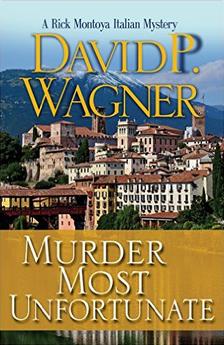
Book Three in the Series
(reviewed on this site)


Here is a link to the book at Amazon.com:


Please visit the author's website where he blogs and provides information on the locations in the books and their regional dishes.  Visit the Poison Pen Press page for the Rick Montoya series.


Monday, August 10, 2015

Chickens Eat Pasta, Escape to Umbria by Clare Pedrick


This memoirs describes an English woman's emigration to Umbria, Italy, in the 1980s.  She purchases a ruin there, has it restored, becomes an active member of a small village, builds an ex-pat career in journalism, and falls in love with and marries an Italian.  Intelligently, the author spoke Italian before emigrating, and she had a career that could move with her, with some effort:  journalism.

The book is very well-written, which is not surprising, since the author is a professional writer.  I thought the playing around with the timeline unnecessary, though, which was likely done to create some suspense in the account.  But when the book's description, and the author's biography tells the ending of the true story, the suspense is really non-existent no matter how the story is told.


Her choice, that started as an adventure, quickly gets bogged down in the realities of life in impractical Italy, especially Italy in the '80s.  It doesn't help that her ruin is in rural, poor, and I'm sorry to say, backward, isolated Umbria.  Some of the lives she describes are painful to read about, because of the archaic nature of the values, economics and roles of women.

There was one sour note in the book for me, too, when the crassness of professional journalists came through.  The author states happily that she found financially lucrative the Achille Lauro hijacking, since the American Mr. Klinghoffer was murdered by the hijackers making the American press eager to buy her stories about the hijackers.


The author does explain why there are so many abandoned rural properties in Italy:
Most Italians these days want something modern and clean...and they think these old places are a sign of poverty.
And she shares what everyone who attempts to live in Italy for any length of time discovers:
How complicated life was in this country, where there seemed to be rules at every turn just waiting to trip you up.  No wonder it was so important to have friends in the right places.
Actually, the book is about many of those friends of the author.  We learn that they smoothed her path in Italy quite a bit in the beginning.  We also learn much about their characters, dramas, and private lives.

That leads to the main thing I missed in the book, a Preface that might have explained that names had been changed to respect the privacy of the many people in the book, whose private moments are repeated for the entire world as entertainment.


I've since learned that the name of the village was changed, so I'm hoping the names of people were changed too, because the thought of that not being the case makes me cringe with discomfort for those described.

It does seem odd, however, that the author bothered to change the name of the village when on the ad pages for her vacation apartments that she rents out in her Umbrian villa she mentions this book about the villa's purchase.

Also missing is a mention of the years covered in the book, which by my estimate are roughly the 1980s.  I lived in Italy during the same period, and spent some of that time in Umbria, so I know that what the author describes is very accurate.  Her memoirs act as a time-capsule of that era.

The last thing I missed was an explanation of how, after thirty plus years, the author could honestly include so many minute details in her memoirs, such as dining menus and people's outfits and their precise words from conversations.  Perhaps she kept a journal?  Perhaps it was fictionalized?  I don't know, because we're never told how the book came to exist, and to exist in such implausible detail.


I don't wish this review to come over as negative, because the book was well-written, and it describes an era in Italy and Umbria that has most likely come to an end.  The Internet age, and an invasion of Italy by retirees, ex-pats and tourists has quite likely brought and end to the isolation described in rural Italy. 

The book immerses the reader in the era and the story, peppering it with local characters and vignettes about their lives.  The account of her mixed culture relationship with a Neapolitan is also very realistic, and would be an excellent warning to those women who dream of running off to Italy to marry an Italian.

Relationships are difficult enough without throwing into the mix all the little misunderstandings that come about from cultural differences, and all the major roadblocks that come from interventions by families and friends who think they know best.  It takes wisdom, patience and understanding on top of a strong love, to make those relationships work.   


From the book's description:
Not just another romance, but a story of escapism, coincidences, friendship, luck and most of all... love.

Chickens Eat Pasta is the tale of how a young Englishwoman starts a new life after watching a video showing a chicken eating spaghetti in a mediaeval hill village in central Italy.

“Here I was, 26 years old, alone and numb with boredom at the prospect of a future which until recently had seemed to be just what I wanted.”

Unlike some recent bestsellers, this is not simply an account of a foreigner’s move to Italy, but a love story written from the unusual perspective of both within and outside of the story. As events unfold, the strong storyline carries with it a rich portrayal of Italian life from the inside, with a supporting cast of memorable characters.

Along the way, the book explores and captures the warmth and colour of Italy, as well as some of the cultural differences – between England and Italy, but also between regional Italian lifestyles and behaviour.

It is a story with a happy ending. The author and her husband are still married, with three children, who love the old house on the hill (now much restored) almost as much as she does.

Chickens Eat Pasta is Clare’s autobiography, and ultimately a love story – with the house itself and with the man that Clare met there and went on to marry. If you yearn for a happy ending, you won’t be disappointed. It’s a story that proves anything is possible if you only try.

Here's a direct link to the book at Amazon.com:


Saturday, August 1, 2015

The Complete Francis of Assisi Edited, Translated, Introduced by Jon Sweeney


The subtitle of this book is His Life, The Complete Writings, and The Little Flowers.  This book is the ultimate St. Francis fan's collection at 400+ pages.  I had been wanting to read (and re-read) all these works for quite a while but now I'm very glad I waited.

The introductions and footnotes provided by the editor of this collection were wonderful and really helped me get the most out of the books, especially Sabatier's classic biography of St. Francis.


The editor says that he intends this collection for two audiences:
for those who already love St. Francis and want to be in his company

also ideal for someone new to the world's most popular saint...the little poor man from Umbria
Those are lovely thoughts, and one does feel in Francis's company when reading the story of his life, and the words written by his own hand, and the charming book Fioretti/Flowers, which reads like an attempt at a Gospel of St. Francis by those who loved the man.

I would add a third audience:  those who are about visit Assisi, Italy, especially those who are visiting the town as a religious pilgrim.


The first book in the collection is The Essential Biography of St. Francis by Frenchman Paul Sabatier, written in 1894.  Necessarily, the author included much material relating to the history of the times and the church in the late middle ages when Francis lived.  The editor's footnotes were very helpful in providing extra background information on these subjects for the modern reader.

Sabatier's style is easy to read and his book includes all the important moments in St. Francis's life.  For pilgrims to Assisi, this book will provide all the locations one would want to visit, explaining the importance of each to Assisi's most famous son.


I found most interesting the parts where Sabatier explained how Francis was viewed by his contemporaries.  That the man was considered a saint during his own lifetime was very impressive, and it explained why he was canonized within only two years of his death.

Sabatier also offers some of his own philosophical observations, which are beautiful in their own right, such as:
The greater number of people pass through life with souls asleep.  Yet the instinct for love and for the divine is only slumbering.

Francis provided in his religious community a refuge for "suffering souls thirsty for the ideal".


The second book is a collection of 19 writings attributed to Francis of Assisi:  Francis of Assisi in His Own Words:  The Essential Writings.  9 of the writings are prayers.  4 are rules for his Franciscan Order.  6 are letters Francis wrote to members of his orders (he founded 3 orders).

The prayers will appeal the most to readers, I suspect, for the same reason that St. Francis appeals to so many people:  their simplicity and their embodiment of Francis's heartfelt love of Christ.  The message is consistent and clear:  love, charity, faith, and humility.

Throughout the writings one sees a real man who is fully human yet inspirational in the path he chooses and the courage he shows in following through with his desire to live a life that emulates Christ's example.


The third book is a medieval collection of 53 stories about St. Francis and his followers:  The Little Flowers of Saint Francis Collected by Brother Ugolino.  The editor has arranged them in chronological order, and if you read them after having read the first two books in the Complete Francis of Assisi, they will be like icing on the cake.

The little flowers, or sweet little stories about St. Francis, read like a Gospel of Francis, a collection of stories and parables to bring glory to the man and to show to the world his sanctity and his Christ-like nature.  What comes across too, through the stories, is the love that people had for Francis during his lifetime, and that he was seen as a saint long before the church canonized him.


Just a note:  for modern readers, the physical abuse that Francis subjected himself to will be rightfully disturbing.  Today's Catholic Church does not condone extreme behavior such as extreme fasts and flagellation.  Today's emulators of Christ, and St. Francis, are along the lines as Mother Theresa of Calcutta, and others like her, who are sanctified for their good deeds, personal sacrifices, and unlimited compassion.

The Complete Francis of Assisi is a wonderful book for pilgrims, and for people who wish to know more about the poor little man from Umbria who set out to live as Christ lived and ended up founding three religious orders, and inspiring so many to strive to live their lives with more love, charity, faith and humility.


From the book's description:
There are many editions of the writings of Francis, and biographies about him, but here in one volume are both, plus the complete text of the late medieval work The Little Flowers, which did more to establish the legend of the man than any other work.

This “Paraclete Giants” edition includes the complete Road to Assisi, Paul Sabatier’s groundbreaking and foundational biography of the saint, first published in French in 1894 and reissued and expanded in 2002; the complete Francis in His Own Words: The Essential Writings; and The Little Flowers, thus offering the best introduction to St. Francis yet available between two covers.

Here is a direct link to the book at Amazon.com:


The editor of this book has published other books about St. Francis.  Here is a selection of them with direct links to their Amazon.com pages.


Please visit the author's website, or follow him on Twitter.

The Complete Francis of Assisi is published by Paraclete Press.  Here is a description of the press in their own words:

Paraclete Press is a publisher of essential Christian wisdom. It is our mission to publish books, music and videos which remind us, “Never lose hope in the mercy of God.” (The Rule of St. Benedict)

Although Benedictine spirituality is at the heart of all we do, we are an ecumenical publisher and as such we present works that unite us and enrich our understanding as Christians, whether Catholic, Protestant, Orthodox or Evangelical.

Paraclete publishes about 40 books a year and distributes the recordings of Gloriæ Dei Cantores and the Monks of Solesmes, France. We also publish sheet music and an award-winning line of educational videos. Our sales department directly serves over 5,000 churches and 5,000 bookstores, and we distribute our books and music through Barnes & Noble, Amazon.com, Books-a-million, Sam's Club and other major retailers.

Here is a link to a very detailed article about St. Francis in The New Yorker magazine. I review other books by this author on this site:

Sweeney - The Enthusiast by Jon M. Sweeney
Sweeney - When Saint Francis Saved the Church by Jon M. Sweeney


Tuesday, July 22, 2014

When Saint Francis Saved the Church by Jon M. Sweeney


The meaty subtitle of When Saint Francis Saved the Church is How a Converted Medieval Troubadour Created a Spiritual Vision for the Ages.  True to the book's title, this is not a biography of St. Francis of Assisi. 

This book looks at why medieval St. Francis is relevant in today's world.  And the book answers the question:  What did St. Francis do that was different than his contemporaries that made his teachings still studied today?

St. Francis of Assisi is in the news lately, due to the new pope's choosing "Francis" ("Francesco") as his papal name, in honor of the humble saint.  That humility and devotion to the poor and victimized is at the heart of Pope Francis's ministry.


The author uses a conversational tone of writing.  The book almost reads like an infomercial at points, and certainly reads like a text with accompanying slides for a presentation, which it turns out was an early form of the book.

Part One - A New Look at Francis sells the reader on reading history books.  The author stresses that:
"well-meaning Christians almost killed the faith eight hundred years ago" and 

"Franics of Assisi saw it coming and turned everything around".   

Francis of Assisi was one of the "signal figures who are catalysts for rapid change".


The underlying thesis of the book is posed as a question:
Is it too bold to suggest that another Francis may just be saving the Church again in the twenty-first century? 
The author refers to Pope Francis, who told the Cardinals who elected him that if we value institutions over seeking the real goals of the Christina life, then things go wrong.  If the Catholic Church is more concerned with its money and property and avoiding lawsuits, then it will ignore the suffering of the people they are there to consul.  The new Pope wants to reformed the church from within.

Pope Francis cannot work change in the institutions of the Catholic church without the help of the Catholic faithful.  That is the role this book aims to fulfill.  The book is a gentle call to arms in support of the Pope's efforts to emulate St. Francis's humanistic teachings and examples.


Part Two - Six Ways Francis Quietly Created a Spiritual Vision for the Ages examines Francis's humanistic views and actions relating to:  friendship (all-inclusive), others (open to outsiders), poverty (humility and moderation), spirituality (in daily life), gentleness (to all God's creatures), death (as a stage of life),

Part Three - Why Francis Matters Right Now is a look at how Francis can inspire people to goodness and faith through emulation of his humanistic views and actions.

The extensive Further Reading section is a gift to those interested in expanding their knowledge of St. Francis of Assisi, and further exploring the ideas of the author.


From the book's description:
In When Saint Francis Saved the Church, popular historian Jon Sweeney presents an intriguing portrait of Francis beyond the readily familiar stories and images.

In the tradition of Thomas Cahill’s How the Irish Saved Civilization, Sweeney reveals how the saint became a hinge in the history of the Christian faith and shows how in just fourteen years—from 1205 to 1219—the unconventional and stumbling wisdom of a converted troubadour changed the Church.

Sweeney outlines Francis’s revolutionary approach to friendship, “the other” (people at the margins), poverty, spirituality, care (for people, creatures, and the natural world), and death.  

This vibrant book presents the unsullied life and message of Francis in its essential details, offering a sweeping, informative, remarkable look at how Francis and his movement quite literally saved the Christian faith—and continues to offer a spiritual vision with contemporary relevance.


When Saint Francis Saved the Church is published by Ave Maria Press.
Founded in 1865 at Notre Dame, Indiana, Ave Maria Press, a ministry of the Congregation of Holy Cross, is a Catholic publishing company that serves the spiritual and formative needs of the Church and its schools, institutions, and ministers; Christian individuals and families; and others seeking spiritual nourishment.

In the tradition of Holy Cross, we are committed, as educators in the faith, to helping people know, love, and serve God and to spreading the gospel of Jesus through books and other resources.


Never been to Assisi, Italy?  Here are six quite minutes of sightseeing in and around the town and basilica.


Here is a direct link to When Saint Francis Saved the Church at Amazon.com:


The author has other books in print, several of which have to do with St. Francis and/or St. Clare.  Here are some of them at Amazon.com:


I review other books by this author on this site:
Sweeney - The Complete Francis of Assisi by Jon M. Sweeney
Sweeney - The Enthusiast by Jon M. Sweeney


Sunday, February 16, 2014

A Footpath in Umbria by Nancy Yuktonis Solak


The book's full title is A Footpath in Umbria:  Learning, Loving and Laughing in Italy.  Memoirs about spending time in Italy are so bountiful that there are now sub-genres within the genre:  hyphenated Italians connecting with their ancestors' heritage, retirees embarking on a new life in a new country, immigrants attempting to set up a business in Italy, students trying to learn the beautiful Italian language, cooks trying to become Italian cuocos-chefs, and Italy as therapy.

That last sub-genre, Italy as therapy, is where I place the divorcees hoping to find peace-of-mind and new love in Italy.  It is also where this memoirs belongs, because the U.S. American author, who suffers from anxiety and a high-strung nature, finds solace in Italy's slower pace of life; Italy's more humane social interactions; Italy's wild nature, low-technology society, relaxed mindset, lovely sounding language, and the ease of making friends in Italy's sociable and accepting society.

The author admits this, when she first visits Italy:
Totally contrary to my genetic makeup, contrary to my usual behavior and preferences, contrary to all logic, I fell madly in love with Italy, its people and its chaos.


Her genetic makeup, as described by the author herself, is Type A, list-obsessed, sarcastic, hyper-competitive, order-seeking, routine seeking, anxious, very self-judgmental, socially restrictive, with depressive tendencies.  Although she does not name this trait, it seems to jump out from the book's text:  a tendency to miss social clues from other people, such as facial clues and body language, clues to other people's feelings and emotional states.

Most likely as a result of that trait, the book keeps us locked into the mind of the author, letting us see the world as she does, as something of a mystery, especially as to why people say and do what they do.  Suddenly, her need for routine and order makes sense, it is a way of managing the frighteningly chaotic world around her.  When the couple arrive in Italy, the author finds herself in a situation where the strange culture makes it normal for her to feel confused.  And strangers are aware that things must be confusing, so they go out of their way to help the couple manage life in Italy, welcoming them into social situations, and forgiving their, at times, awkward social behavior.  So the author's usual social anxiety is no longer a barrier to enjoying life.  She enjoys these new situations, situations that would normally cause her anxiety.


The author has a touching insight at one point, when contemplating why she loves books so much, a love that certainly lead her to become a librarian:
If only I could be as focused in my daily life as I am when my nose is in a book, I suspect I would not need as much time for reading and would spend more time living.
By "focused" is suspect she means "as aware of other people's inner states".  In a novel, the author tells us the character's inner state, bringing the character to life.  In real life, we have to discern other people's inner states in order to feel they are alive to us.  Italians are highly expressive people, verbally and physically, not afraid of showing exaggerated emotions in public, so I imagine discerning their inner states of Italians is not as difficult for the author as it might be at home in the U.S., in a community that shuns emotionality and verbosity.

She actually comments positively in the book on how verbal Italians are, and on their physical expression of their feelings.  This physically may have had an effect on her husband, because at one point in the book, the author comments that she is becoming better able to discern her husband's irritation by the increased tension in his body.  Being able to discern this, she comes to understand when his patience is tried to the limit, something she was unable to do in the past.


True to the author's need for order, the book, which I received as a review-copy, does not follow the usual chronological order of memoirs, but is instead grouped by subject matter.  So, intentionally or not, the book can be seen as a guide for the visitor to the various tasks necessary for daily life in Italy:  grocery shopping, general shopping, learning the language, looking for housing, telephoning home, posting letters and packages, getting around, making new friends,  getting your hair styled, using the internet, finding doctors and dentists, surviving in a hospital.

As her stay with her husband in Italy progresses, the author's anxieties soften to the point that she can embrace improvised activities and spontaneous social interactions.  She admits at that point:
This is how retirement is.  You run into something interesting and suddenly the plans you made that morning vaporize and you don't care one whit if they change completely.


Sadly, she relates that when she returns home, she reverts to her old habits.  While she may have changed in response to Italy's more relaxed, accepting, highly social, and much kinder culture, the culture of home has not changed.  It quickly has the old effect on her, making her high-strung nature return.  Italy is therapeutic for the author, but it is a therapy that must be taken continually to be effective.  Not a bad reason to move to Italy! 

The style of writing reminds me of a letter home to a dear friend, letting them know about the daily struggles of the writer's new adventure.  The book is scrupulously edited, with not a typo in sight!  There are fifty photographs that compliment the text perfectly.  This is an interesting read, about an unusual woman, written from her own unique perspective.  I suspect that what the author found most wonderful about Italy is really what so many others find wonderful, but they convince themselves that what they love most is the food, wine, and art.  Food, wine, and art do not give the same emotional jolt that a human connection does.  I believe it is Italy's moments of human connection that draw people back there, just as they draw this author back to Italy.


From the book's description:
Being a homebody, Nancy never would've spent a year in Italy had it not been for her husband's wanderlust. The couple didn't go there to buy or restore a house or to heal a trauma from the past. As ordinary boomers, they simply wanted to experience "The Dream" - to live in Italy.

They settled down in traditional Umbria, just east of Tuscany. Constrained by a strict budget, their experience took on challenges as diverse as getting accustomed to the vagaries of Italian appliances to gathering their own wood. Transportation was by train, bus, bicycle or footpath.

What neither of them knew when they began was how the adventure would challenge their habits, upbringing, and outlook on life. Most surprising of all was how the experience would challenge their relationship to each other.

A Footpath in Umbria is a celebration of the joys and revelations to be found by changing venues, whether it's living in another country or simply venturing cross town.

This book reminded me of another book that was adapted to film:  My House in Umbria.  The story is about a group of people who suffer a trauma in Italy, especially a young girl, and they all find solace in Italy's cultural "therapy".  Here is the trailer for the film:


A Footpath in Umbria is available as a Kindle e-book and as a paperback edition.  Here are links to the books at Amazon.com.


Here is a beautiful and therapeutic two-minute postcard video of Umbria:


This review is by Candida Martinelli, of Candida Martinelli's Italophile Site, and the author of the cozy-murder-mystery novel AN EXTRA VIRGIN PRESSING MURDER, and the young-adult/adult mystery novel series THE VIOLET STRANGE MYSTERIES the first book of which is VIOLET'S PROBLEM.


Friday, February 14, 2014

Legends of the Sibilline Mountains by Giuseppe Santarelli


I enjoyed this book which is packed with information.  All the interesting links made between fantasy, history, religion and literature makes this a wonderful pre-read for anyone traveling to the area of the Sibilline Mountains, between Le Marche and Umbria in Italy.

This little book, which was given to me as a review-copy, can inspire a reader to look up the many literary and musical transformations of the legends of the Sibilline Mountains, which can never be a bad thing.  Aretino, Wagner, Ariosto, Andrea da Barberino, even Leopardi, were all inspired by these mountains.


The book will be especially interesting to those who have roots in that region, and for anyone interested in the evolution of thinking from the superstitious Middle Ages to the humanist Renaissance.  Students of European literature will find it especially interesting.  The many footnotes are explained in detail in a section at the back of the book.  There are thirteen illustrations/photographs. 


Here is a lovely 3 minute video postcard of the Sibylline Mountains:


Here is the first line of the book:
This pamphlet, on the legends of the Sibylline Mountains, was born from a double feeling of affection:  one for the sanctuary of the Madonna dell'Ambro, and the other for the land of Piceno, sweet cradle of my birth.

From the book's description:
Legends of the Sibilline Mountains is a small book about an obscure corner of Italy and an equally obscure backwater of world literature. And yet the subjects it touches upon--amongst them, the roots of literature in popular consciousness, the intimations of Christian existentialism, the absorption of pagan traditions into Christianity--reach far and wide.

Goddess worship, necromantic rites, the death of Pontius Pilate, Benevenuto Cellini, Goethe's "Faust" Wagner's "Tannhauser"...they all connect here in a real place of strange geological formations and magical beauty. The Sibilline Mountains, dividing Le Marche from Umbria, were "celebrated in the 14th and 15th centuries throughout all Europe for magical fairytales and necromantic initiations," according to the author Giuseppe Santarelli.

In the most famous of these tales a mysterious Sibyl inhabits a grotto devoted to the pleasures of the flesh, luring knights to eternal damnation. Another legend concerns the Lago di Pilato, a mountaintop lake where Pontius Pilate's body had been cast, that later became a destination for demonic rituals. In a witty and personal tone Santarelli discusses the origins of the myths in folklore, their literary transformations through the centuries, and the archeological traces they left behind.

The Legends of the Sibilline Mountains is available as a paperback via Amazon.com:


This review is by Candida Martinelli, of Candida Martinelli's Italophile Site, and the author of the cozy-murder-mystery novel AN EXTRA VIRGIN PRESSING MURDER, and the young-adult/adult mystery novel series THE VIOLET STRANGE MYSTERIES the first book of which is VIOLET'S PROBLEM.